
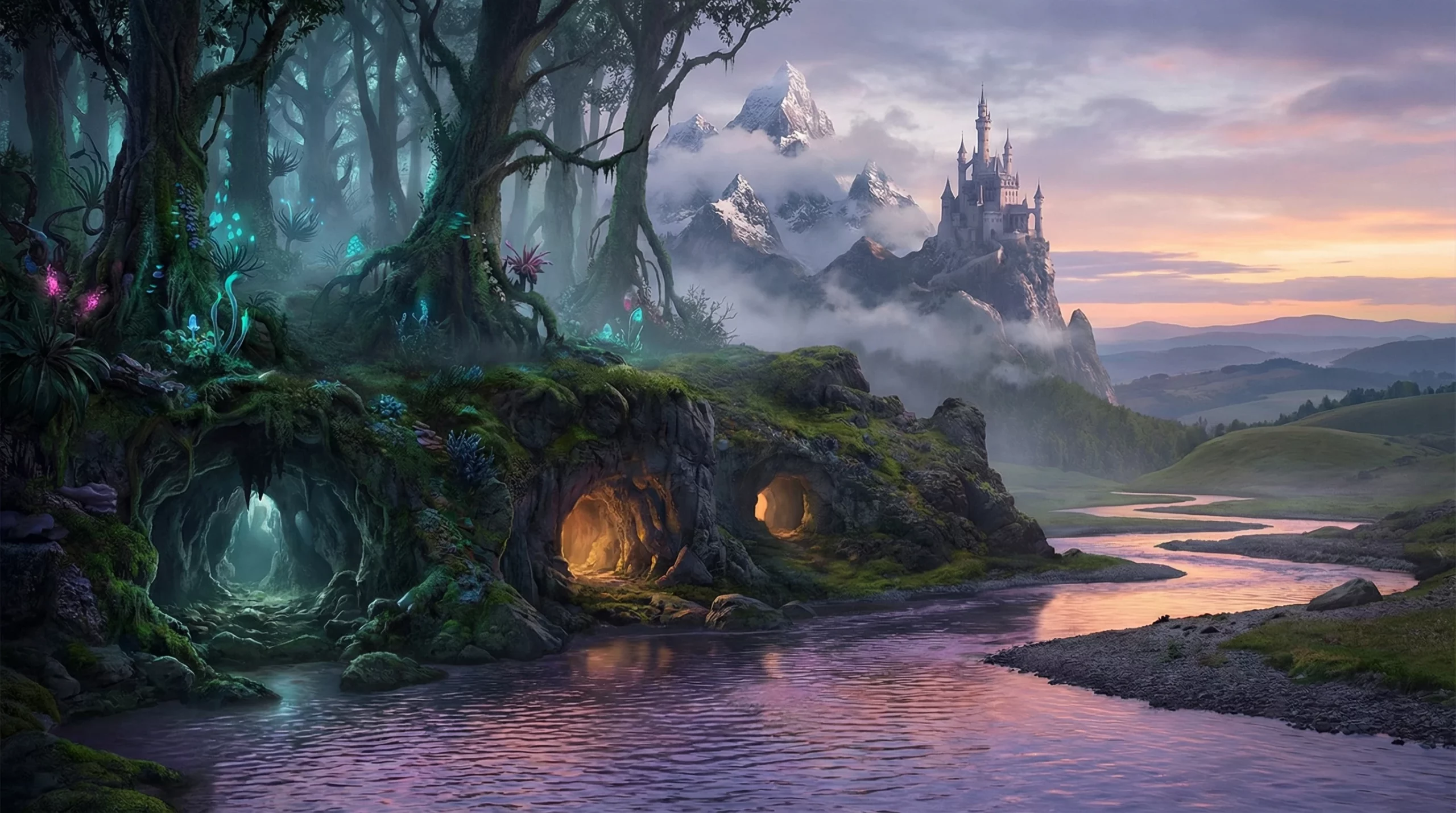
Crafting fantasy landscapes is one of the most fun ways I let my imagination run wild. Whether I’m worldbuilding for a tabletop RPG, sketching for a story, or mapping a video game level, a big part comes down to how I mix and match different natural features. Mountains, forests, deserts, plains—all of these bring their own vibe, and the combination you use can totally change the mood and story of your world. In this article, I’m sharing my tips for designing diverse fantasy landscapes that feel alive, balanced, and full of adventure potential.
Understanding the Role of Landscapes in Fantasy Worlds
Landscapes do more than fill the background; they shape the stories, cultures, and the very mood of a fantasy setting. I’ve noticed that the places I create often become characters themselves. Think of how Tolkien’s Middle-earth feels so real partly because of its varied hills, ancient forests, and towering mountain ranges. Even in a game like Skyrim, wandering from snowy peaks down into dense pine forests feels like entering an entirely new world. That kind of variety keeps things interesting both for me and for anyone experiencing the setting.
Mountains often set physical boundaries and bring drama, while forests inspire mystery or danger. Deserts, swamps, lakes, and coastal cliffs all serve special purposes, like creating natural challenges, keeping civilizations apart, or hiding long-lost secrets. By mixing and matching terrains, I can help drive the story through the world itself.
Designing Mountains: Drama, Barriers, and Inspiration
Mountains are some of my favorite features because they add a sense of scale and grandeur. I usually start with a rough sketch or map, outlining mountain ranges to act as natural barriers. These can influence climate, border kingdoms, or even hold mythical creatures and hidden cities. Here’s what I keep in mind:
- Placement: Mountains often run in lines instead of circles, following the way tectonic plates might move in the real world. Even if realism is less important, adding a few parallel ranges can make things feel more convincing.
- Variety: I like to mix tall, snowy peaks with lower, rocky hills. Some mountains might be volcanic, others jagged and treacherous.
- Function: Maybe one range blocks storms, leading to lush forests on one side and dry badlands on the other. A single solitary mountain can be a pilgrimage site, a dragon’s lair, or a border marker between feuding countries.
Mountains can split up cultures, too. People on opposite sides might speak different languages or worship different gods. On the slopes, you’ll find hardy folk adapted to altitude or tough terrain, giving even more variety to your world’s inhabitants.
Creating Forests: Lush, Mysterious, and Full of Stories
Forests in fantasy settings always spark my curiosity. I use them to create places of mystery, magic, or just simple beauty. Here’s how I make forests feel unique and purposeful:
- Type: Pine, oak, jungle, or magical glittering woods all change the story. A shadowy pine forest can be home to ancient spirits, while a bright birch glade could shelter fairies and woodland folk.
- Size and Shape: Some forests are massive, blanketing whole regions, while others might be a narrow strip along a river. It helps to think about why a forest grew there; climate, rainfall, and so on.
- What’s Inside: I like to drop in ancient ruins, giant trees, hidden caves, or forgotten trails. These details make forests worth exploring and can tie directly into the plot.
Forests can also act as barriers or connections; hard to cross for armies, but maybe offering secret shortcuts for locals or those with the right magic. Changing up densities, kinds of trees, and what lives there helps keep every forest different and memorable.
Foldable Battle Mat with DM Screen, Game Tokens, Dice Set – 2-Sided Wet & Dry Erase Terrain, Ultimate DND Starter Set

Mixing in Other Terrains: Deserts, Wetlands, and More
Mountains and forests get a lot of attention, but I’ve found that adding a mix of less common terrains brings a fresh dynamic. Here are a few I love working into my worlds:
- Deserts: Hot, cold, rocky, or sandy; deserts offer mystery and challenge. They might hold ancient tombs or lost cities beneath the dunes. Sudden oases give life a foothold, and storms can change the landscape overnight.
- Wetlands: Swamps, bogs, and marshes add a twist to adventuring. These places often hide rare herbs, weird creatures, and danger lurking under the water. I use them to block easy travel and add a creepy, unpredictable mood.
- Coastal Features: Cliffs, beaches, and tidal flats mix it up near oceans or big lakes. Fishing villages, pirate coves, and storm-battered lighthouses all give personality to shorelines.
- Plains and Grasslands: Open fields, rolling hills, or endless steppes are great places for travel, nomadic people, or massive battles.
I also like thinking about how these terrains meet. Maybe there’s a sudden transition from mountain foothills to rich forest, or a marsh forming at the edge of a forested floodplain. Those border zones are where the most interesting stuff happens, like bustling trade routes or strange magical events.
Quick Guide: Building Believable Landscapes
Even in fantasy, I try to ground my worlds with a little logic, because it makes everything feel more real to players and readers. Here are my best habits for creating believable terrain:
- Start With a Sketch: Rough out where mountains, forests, and main water features go. Rivers generally flow downhill from mountains, so that’s my first move.
- Add Logic: Think about climate zones. If it rains a lot on one side of the mountains, I’ll put a big forest there. The other side might be drier.
- Mix Scale: I use both wide views (continent or region maps) and zoomed-in areas (single valleys, specific caves, etc.). This helps with both epic storylines and more focused encounters.
- Drop in Details: Small lakes, isolated ruins, or mysterious groves go a long way in making a world feel custom built, not copypasted.
- Connect to Lore: I always ask what important history ties to each natural feature. A haunted forest, a river used for royal processions, or a mountain that marks a forgotten battle helps the world feel alive.
Mixing these steps gets me landscapes that aren’t just eye catching to look at, but also tell their own stories.
Common Challenges and How to Tackle Them
As much as I love making new worlds, some roadblocks pop up. Here’s what I watch out for, and what’s worked for me:
- Repetition: It’s easy to slip into the habit of identical forests or endless mountains. Changing shapes, sizes, and adding unique features (like a glowing river or petrified trees) keeps things interesting.
- Scale Issues: Sometimes my maps start to feel off. Maybe the cities are too close together, or the desert isn’t big enough to feel dangerous. I keep a scale bar and compare to real world places for a reality check.
- Too Much or Too Little Detail: Cramming the map with features makes it confusing, while too little can make it feel bland. I focus on a handful of “landmark” features and fill out smaller spots as stories demand.
Dealing With Repetition
Breaking up the monotony isn’t hard if I’m intentional about what’s special in each area. Maybe one forest is famous for its fog, another for its giant animals, and a third is home to a network of hidden tunnels.
Tackling Scale
For me, nothing beats comparing my fantasy map to a real place. If I want a adventure to feel like an epic trek, I’ll look up the distance of something like the Swiss Alps or the Amazon rainforest, using that as a guide.
Balancing Detail
I always remind myself I can add details later. A basic outline lets me adapt as the story or game grows; no need to fill in every rock and tree from the start.
I’ve found that worlds feel richer and more fun to explore when the landscapes are made with care and creativity. Mixing mountains, forests, wetlands, and other features gives each area a personality, and loads of places for adventure to unfold.
Extra Tips for Making Fantasy Landscapes Stand Out
After I’ve covered the basics, here’s a few tricks that help my worlds feel unique and memorable:
Unique Landmarks: Legendary trees, crystalline caverns, floating islands, or mysterious mists add a sense of wonder. I sometimes tie these places to myths, rare magic, or world changing events.
Seasonal Changes: If winter covers the northern lands in ice, or a monsoon floods the lowlands, it adds drama and keeps the world feeling alive.
Magical Effects: A stretch of enchanted forest where time moves differently or a storm that never ends is a fun way to set the mood and offer new story hooks.
Frequently Asked Questions
Here are some questions I often get about worldbuilding for fantasy landscapes:
Question: How do I keep different regions feeling distinct?
Answer: I focus on both natural features (like forests or mountains) and smaller details like local weather, unique plants, or customs tied to the land.
Question: Do I need to know real-world geology to make a good map?
Answer: Geology basics definitely help, but nobody expects perfection. Even just following the idea that rivers flow from high to low land and mountains form lines instead of perfect circles gets you pretty far.
Question: How much detail should I add to my world maps?
Answer: I usually start simple and add details as the story or game needs them. Major landmarks, a few key towns, and a rough idea of the wild regions is enough for many projects.
Where Inspiration Comes From
I pull ideas from all over; real maps, travel documentaries, and even food shows that explore local cultures. My own travels, hikes, or even walking through a city park help spark ideas too. Sometimes just doodling without a plan leads to cool new landscapes. Observing the shapes of real coastlines, mountain ranges, or forests on maps can also give a great starting point for unique fantasy regions.
Building a fantasy world is really about combining what feels fun and what serves your story. Mountains, forests, and all the wild spaces beyond become the spaces your characters live, struggle, and stumble upon themselves in. As long as you mix things up and give each region a reason to exist, your world’s going to feel like somewhere worth exploring.
One last bit—continually check if each region stands out on its own. Give every place its own quirks, moods, or legends. That way, you’ll end up with a fantasy landscape that feels authentic, inviting, and ready for epic adventures.
Our website contains affiliate links. This means if you click and make a purchase, we may receive a small commission. Don’t worry, there is no extra cost to you. It’s a simple way you can support our mission to bring you quality content.
**Disclaimer**: The views expressed in this article are based on personal experience and creativity. Always consider multiple perspectives when designing fantasy landscapes.
About the Author
Seraph is an aspiring worldbuilder and creative enthusiast who explores the realms of imagination through collaboration with AI. By sharing ideas and visions, they bring vibrant stories and unique fantasy realms to life. Passionate about crafting immersive worlds, Seraph invites readers to join the adventure of discovery and creativity.