
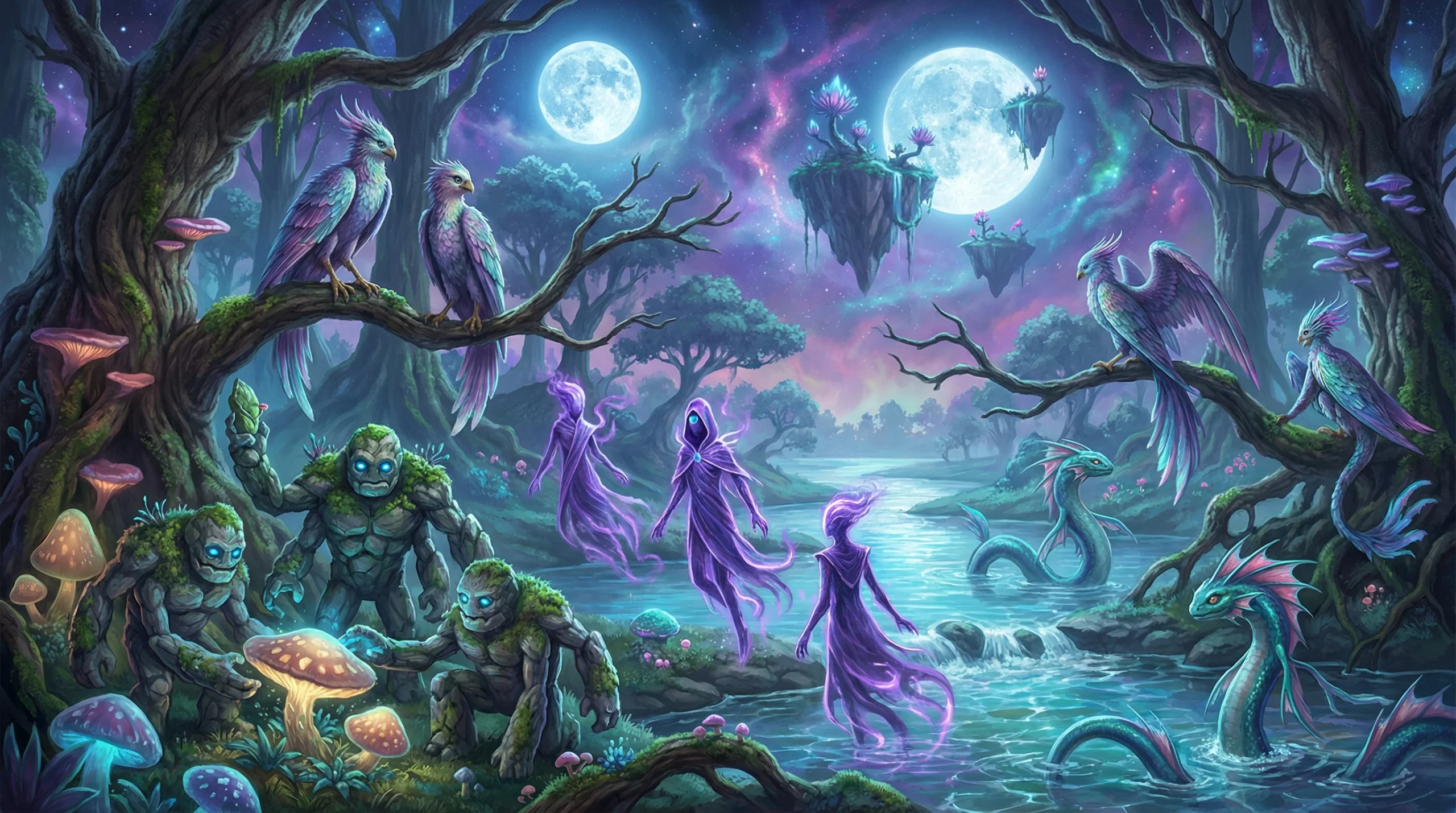
Making up your own fantasy races can bring a world to life. The best stories and games often feature distinct races with cool physical traits and special abilities that make them pop off the page. Whether you’re building a tabletop RPG, planning a novel, or just designing for fun, unique physical features and talents are often at the heart of what makes one race feel different from the next.
Sometimes it’s tempting to start with the usual suspects, such as elves with pointy ears or dwarves with long beards. But the real magic happens when you go further. There’s a lot more you can do than just giving a race a weird nose, odd skin texture or a different haircut. By thinking through physical traits and abilities in a thoughtful way, you can add depth, possibility, and originality to your setting. In fact, making unique races helps your world stand out from the crowd and sparks more interest from your audience as they stumble upon something new.
Here’s a guide that covers some practical ways to design eye-catching, memorable races by playing with physical traits and special skills. Dig into the steps below for inspiration.
Step 1: Figure Out the Purpose of Physical Traits and Abilities
Physical traits are more than just surface details. They do a lot of heavy lifting in stories and games. Unique features can impact a race’s culture, their environment, and the way other characters view them. Abilities can influence how a race survives, communicates, or even fights.
Questions That Help Pin This Down
- How does a race’s body help them survive in their world?
- Are there special senses, limbs, or appearances that fit their environment?
- How are abilities shaped by culture, history, or magic?
- Which features set them apart visually?
Answering these first makes sure you’re not just picking random traits, but building toward something that feels right for your world. Pairing these questions with a bit of brainstorming can open the door to more creative and unexpected features for your original fantasy races.
>>Designing your own Fantasy Races<<
Step 2: Choose Physical Features That Reflect Environment
When I think about physical features, I always start with the home environment. If your race lives deep underwater, things like webbed feet, gills, or smooth skin make sense. For desert dwellers, tough skin, extra eyelids, or even the ability to burrow can all be great touches. Think about climate, geography, and predators or resources—these factors can all shape what the race looks like and what they need to survive.
Things to Think About When Designing Physical Traits
- Body shape: Tall, short, bulky, slender—does it help them in their habitat?
- Color: Camouflage for survival? Bright colors for communication?
- Textures and markings: Scales, fur, feathers, or something else?
- Special body parts: Extra arms? Tails? Horns? Something else handy or dramatic?
Picking specific features that tie into the environment not only makes a race feel real, but makes them easier for others to visualize and remember. You can even mix in some variety by thinking about seasonal changes or regional subtypes within your race, just like real world animals adapt in different ways. Such touches make your creation feel much more like a living species.
Step 3: Give Each Race Distinct Abilities
Abilities can be physical (like claws or wings), magical (seeing in the dark or controlling elements), or even social (an ability to sense emotions or communicate telepathically). The trick is to match these with both form and setting, so they don’t feel tacked on.
Types of Abilities to Consider
- Movement: Speed, jumping, flight, swimming.
- Senses: Night vision, keen smell, heat detection.
- Natural weapons or tools: Claws, tusks, poison.
- Regeneration or resistance: Healing quickly, resisting climate or magic.
- Unique magic: Spellcasting tied to culture or biology.
When I design, I try to pick just one or two abilities per race to start with. That way, they stay distinct and don’t turn into a list of superpowers. If the setting is especially magical, adding a unique spellcasting tradition or an elemental connection can help pump up their fantasy flavor without overloading them with too many powers.
Essential Heroes – 55 Hero, Player Characters, NPC for DND Miniatures Bulk I 28mm Dungeons Dragons D&D Miniatures

Step 4: Avoid Overlapping Too Much With Existing Races
One of the easiest traps is creating something that turns out to be a wolfman with a different name, or an elf with bonus horns. To keep races original, it helps to mix and match unexpected traits, or draw inspiration from animals and cultures that aren’t often used in fantasy. Asking friends for first impressions of your ideas can help spot when your work feels too familiar and needs a twist to keep things fresh.
Tips for More Unique Creations
- Blend features from several animals, plants, or even minerals.
- Try using traits based on fungus, insects, or aquatic life.
- Look at real-world cultures, but focus on what fits your story and steer clear of stereotypes.
Testing out combinations on paper or in sketches can help you spot when you’re getting too close to something already out there, and gives you time to tweak things until they feel fresh. Don’t hesitate to abandon ideas if they don’t excite you—sometimes letting go sparks new discoveries elsewhere.
Step 5: Connect Traits To Culture and Daily Life
The coolest races have traits that influence everything from food to celebrations. If a race has big tusks, maybe they use them in rituals. If they communicate with glowing skin patterns, maybe they have dances or art built around light. Thinking about everyday life creates a natural link between physical traits and the culture you want them to have. Try writing a short vignette about a day in this race’s life, or imagine a local festival, to see what details emerge.
Everyday Impacts Worth Exploring
- How do traits affect travel, work, or play?
- Do special senses change how they build their homes?
- Are there traditions built around their unique bodies?
- How do outsiders react to these features?
This helps make your races feel like real, lived-in parts of the world, and not just background extras. The more these practical ties show up, the more likely your audience will remember what sets your races apart.
Step 6: Keep Balance In Mind If You’re Making a Playable Race
When players or readers are supposed to identify with your race, balance matters. Giving a group the ability to fly, cast spells, and lift huge weights can be fun, but it may overpower others. I usually give each cool trait a trade-off, like keen hearing but an aversion to loud noises, or powerful claws but clumsy hands.
Ways to Keep Things Fair
- Limit strong abilities with natural drawbacks.
- Mix strengths with weaknesses.
- Compare your race’s abilities with others to avoid runaway power.
This way, the race stays interesting without breaking the game or story. For games, consider consulting with your players to check what feels fun and fair—by getting group feedback, you keep everyone invested and avoid surprises later on.
Common Questions & Troubleshooting
What if I get stuck making something original?
Try thinking about unexplored places on Earth or unusual animals. Sometimes blending unexpected features, such as turtle shells with kangaroo pouches, can help spark an idea. Looking up myths from less-used cultures or digging into nature documentaries for weird adaptations also stirs the imagination.
Is it okay to revisit classic fantasy races?
It’s totally fine! Just give them a new spin or highlight new traits. Maybe dwarves are built for climbing, not mining, or elves have insectlike wings instead of pointed ears. An old classic can feel new again with just a few fresh traits or a twist in abilities.
How many abilities should a single race have?
Two or three at most usually feels about right for something memorable and game-friendly. Focus on what makes them different rather than how many things they can do. Limiting powers helps make the race easier to understand and play with.
Final Thoughts & Next Steps
Building races with unique physical traits and abilities brings color and fun to any fantasy setting. Focus on form and function together, draw from the setting and culture, and keep things balanced. If you’re unsure, start with one trait or power and see how it shapes the rest of their society. As you come up with details, jot down how each feature changes everything from daily chores to relationships with neighbors.
When your fantasy races feel real enough that you could imagine bumping into them at the local market—quirks and all—that’s when you know you’re onto something special. Stumble upon fun quirks, experiment freely, and don’t be afraid to mix things up. Remember, the weirder or more specific your idea, the more likely it is someone else will want to check out your world.
Your Worldbuilding Checklist:
- Pick one core physical trait that makes your race stand out visually.
- Add a special ability or sense that fits their world.
- Think through how these features shape culture and daily life.
What’s the most unusual race trait you’ve seen or thought up? Drop your ideas in the comments and help others track down even more inspiration!
Our website contains affiliate links. This means if you click and make a purchase, we may receive a small commission. Don’t worry, there is no extra cost to you. It’s a simple way you can support our mission to bring you quality content.
**Disclaimer**: The views expressed in this article are based on personal experience and creativity. Always consider multiple perspectives when designing fantasy races.
About the Author
Seraph is an aspiring worldbuilder and creative enthusiast who explores the realms of imagination through collaboration with AI. By sharing ideas and visions, they bring vibrant stories and unique fantasy realms to life. Passionate about crafting immersive worlds, Seraph invites readers to join the adventure of discovery and creativity.